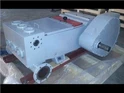

A plunger pump is a type of positive - displacement pump where the reciprocating motion of a plunger is used to move fluid. The pulsation of a plunger pump is a crucial characteristic that affects its performance, application, and the overall system it operates within.
Understanding the Basics of Plunger Pump Pulsation
At the heart of a plunger pump, the plunger moves back and forth within a cylinder. During the suction stroke, the plunger retracts, creating a low - pressure area that allows fluid to enter the cylinder. On the discharge stroke, the plunger moves forward, increasing the pressure and forcing the fluid out of the cylinder. This cyclic motion is the root cause of pulsation in a plunger pump.
Pulsation can be defined as the periodic variation in pressure and flow rate that occurs as the plunger moves through its strokes. In a single - plunger pump, the pulsation is quite significant. When the plunger is on the discharge stroke, there is a sudden increase in pressure and flow rate, followed by a sharp decrease when the suction stroke begins. This creates a pulsating flow pattern that can be problematic in many applications.
Causes of Pulsation in Plunger Pumps
The main cause of pulsation in plunger pumps is the intermittent nature of the pumping action. Unlike centrifugal pumps, which provide a relatively continuous flow, plunger pumps rely on the reciprocating motion of a plunger. Each time the plunger changes direction, there is a change in the pressure and flow rate.
Another factor contributing to pulsation is the compressibility of the fluid. When the plunger compresses the fluid during the discharge stroke, the fluid stores energy in a compressed state. As the plunger retracts during the suction stroke, the fluid expands, and this energy is released. This expansion and contraction of the fluid also contribute to the pulsating behavior of the pump.
Effects of Pulsation
The pulsation in a plunger pump can have several effects on the pump itself and the overall system. Firstly, it can cause mechanical vibrations. The sudden changes in pressure and flow rate create forces that can shake the pump and the connected piping. Over time, these vibrations can lead to wear and tear on the pump components, such as seals, valves, and bearings. This not only reduces the lifespan of the pump but also increases the maintenance requirements.
Secondly, pulsation can affect the accuracy of flow measurement. In applications where precise flow control is required, the pulsating flow can make it difficult to obtain accurate readings. For example, in chemical dosing systems, inaccurate flow measurement can lead to incorrect dosing, which can have serious consequences for the process.
Thirdly, pulsation can cause pressure surges in the piping system. These surges can exceed the design pressure of the pipes and fittings, leading to leaks or even pipe bursts. This is a significant safety hazard, especially in applications where the fluid being pumped is hazardous.
Mitigating Pulsation in Plunger Pumps
To address the issues caused by pulsation, several methods can be employed. One common approach is to use multiple plungers. In a multi - plunger pump, the plungers are arranged in such a way that their strokes are offset from each other. This means that while one plunger is on the discharge stroke, another may be on the suction stroke. As a result, the overall flow rate and pressure are more uniform, reducing the pulsation.
Another method is to use pulsation dampeners. These are devices installed in the piping system near the pump outlet. Pulsation dampeners work by storing and releasing fluid energy. When there is a pressure surge, the dampener absorbs the excess energy, and when the pressure drops, it releases the stored energy. This helps to smooth out the pulsating flow.
Applications of Plunger Pumps and the Role of Pulsation
Plunger pumps are widely used in various industries due to their ability to generate high pressures. In the oil and gas industry, Well Service Pump are used for well - servicing operations such as acidizing, cementing, and pressure testing. In these applications, the pulsation of the pump needs to be carefully managed to ensure the safety and efficiency of the operations.
In the construction industry, Trenchless Engineering Mud Pump are used for horizontal directional drilling. The pulsation can affect the performance of the drilling equipment and the quality of the drilling process. By controlling the pulsation, the efficiency of the drilling operation can be improved.
In the mining industry, well service pumps can also be used for dewatering and slurry transfer. The pulsation in these pumps can cause problems such as pipeline blockages and equipment damage. Therefore, understanding and mitigating the pulsation is crucial for the smooth operation of mining processes.
Our Role as a Plunger Pump Supplier
As a leading plunger pump supplier, we understand the importance of pulsation control in different applications. Our pumps are designed with advanced technology to minimize pulsation. For example, our multi - plunger pumps are engineered to have precise stroke offsets, ensuring a more uniform flow rate and pressure.
We also offer a range of pulsation dampeners that are specifically designed to work with our pumps. These dampeners are made from high - quality materials and are tested to ensure their effectiveness in reducing pulsation.
In addition, our team of experts provides technical support to our customers. We can help customers select the right pump and pulsation control solution based on their specific application requirements. Whether it is a small - scale laboratory application or a large - scale industrial project, we have the expertise to provide the best solution.
Why Choose Our Plunger Pumps?
Our plunger pumps are built to last. We use high - quality materials and advanced manufacturing processes to ensure the durability and reliability of our products. Our pumps are also designed for easy maintenance, which reduces downtime and operating costs.


We are committed to providing excellent customer service. From the initial consultation to after - sales support, we are always there to assist our customers. Our goal is to help our customers achieve optimal performance from their pumps while minimizing the impact of pulsation.
If you are in the market for a plunger pump or need to upgrade your existing pump system, we invite you to contact us for a discussion. Our team of experts can provide you with detailed information about our products and how they can meet your specific needs. We look forward to working with you to find the best plunger pump solution for your application.
References
- Balk, Robert S. "Positive - displacement pumps: design and applications." CRC press, 2012.
- Karassik, Ilan J., et al. "Pump handbook." McGraw - Hill Education, 2009.