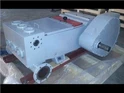

Hey there! As a supplier of Triplex Pumps, I often get asked about the power rating of the motor required for these pumps. It's a crucial question, as getting the right motor power is essential for the efficient and reliable operation of a Triplex Pump. So, let's dive into this topic and break it down.
Understanding Triplex Pumps
First off, let's quickly go over what a Triplex Pump is. A Triplex Pump is a type of Positive Displacement Pumps that has three plungers or pistons. These pumps are widely used in various industries, such as oil and gas, water treatment, and chemical processing, because they can handle high pressures and deliver a consistent flow rate.
Factors Affecting Motor Power Requirement
Several factors come into play when determining the power rating of the motor needed for a Triplex Pump. Let's take a look at each one of them.
Flow Rate
The flow rate is the amount of fluid that the pump needs to move in a given period. It's usually measured in gallons per minute (GPM) or liters per second (L/s). The higher the flow rate required, the more power the motor will need. This is because the motor has to work harder to push the fluid through the system at a faster pace.

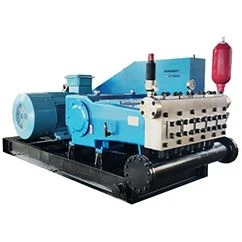
Pressure
Pressure is another critical factor. The pump has to overcome the resistance in the system to deliver the fluid at the desired pressure. Higher pressures mean the motor has to generate more force, which in turn requires more power. Pressure is typically measured in pounds per square inch (PSI) or pascals (Pa).
Pump Efficiency
The efficiency of the pump itself also affects the motor power requirement. A more efficient pump will convert a higher percentage of the input power from the motor into useful work, i.e., moving the fluid. So, if you have a pump with high efficiency, you may be able to get away with a lower-powered motor compared to a less efficient pump.
Fluid Properties
The properties of the fluid being pumped, such as its viscosity, density, and temperature, can also impact the motor power. For example, a more viscous fluid will require more power to pump because it offers more resistance to flow. Similarly, a denser fluid will also need more energy to move.
Calculating the Motor Power
Now that we know the factors involved, how do we calculate the power rating of the motor required for a Triplex Pump? Well, there's a formula for that.
The basic formula to calculate the hydraulic power required by the pump is:
[ P_h=\frac{Q\times P}{1714} ]
Where:
- ( P_h ) is the hydraulic power in horsepower (HP)
- ( Q ) is the flow rate in GPM
- ( P ) is the pressure in PSI
Keep in mind that this is just the hydraulic power. The actual motor power needed will be higher than this because of pump and motor inefficiencies. To account for these inefficiencies, we use a factor called the "brake horsepower" (BHP). The formula for calculating the BHP is:
[ BHP=\frac{P_h}{\eta_p\times\eta_m} ]
Where:
- ( P_h ) is the hydraulic power in HP
- ( \eta_p ) is the pump efficiency (expressed as a decimal)
- ( \eta_m ) is the motor efficiency (expressed as a decimal)
Let's say we have a Triplex Pump with a flow rate of 100 GPM and a pressure of 1000 PSI. The pump efficiency is 80% (or 0.8) and the motor efficiency is 90% (or 0.9).
First, we calculate the hydraulic power:
[ P_h=\frac{100\times1000}{1714}\approx58.35\text{ HP} ]
Then, we calculate the BHP:
[ BHP=\frac{58.35}{0.8\times0.9}\approx80.76\text{ HP} ]
So, in this case, we would need a motor with a power rating of approximately 81 HP to drive the Triplex Pump efficiently.
Different Applications and Motor Power Needs
The power requirements can vary widely depending on the specific application of the Triplex Pump.
In the oil and gas industry, for example, Triplex Pumps are often used for high-pressure applications such as well stimulation (fracking). These pumps need to operate at very high pressures, sometimes reaching up to thousands of PSI. As a result, they typically require large, high-power motors.
On the other hand, in a water treatment plant, the pressures and flow rates may be relatively lower. So, the motor power needed for the Triplex Pump will also be less.
Another application is Reciprocating lean amine Pump, where the pump is used to handle specific chemicals in a chemical processing plant. The motor power for this type of application will depend on the properties of the lean amine and the process requirements.
Importance of Proper Motor Sizing
Getting the right motor power for your Triplex Pump is not just about efficiency; it's also about the longevity of the equipment. If the motor is underpowered, it will have to work harder to meet the pump's demands. This can lead to overheating, premature wear and tear, and even motor failure.
On the other hand, if the motor is oversized, it will consume more energy than necessary, which is not only wasteful but also increases operating costs. So, it's crucial to accurately calculate the power rating and select the appropriate motor.
Other Considerations
When choosing a motor for your Triplex Pump, there are a few other things to keep in mind.
- Motor Type: There are different types of motors available, such as electric motors and diesel motors. The choice of motor type will depend on factors like the availability of power sources, the location of the pump (e.g., remote areas may require diesel motors), and environmental considerations.
- Speed: The speed of the motor can also affect the performance of the pump. Some pumps are designed to operate at specific speeds, so it's important to choose a motor that can provide the required speed.
- Control System: A good control system can help optimize the operation of the motor and pump. It can adjust the motor speed based on the demand, which can improve energy efficiency and reduce wear.
Conclusion
Determining the power rating of the motor required for a Triplex Pump involves considering several factors, including flow rate, pressure, pump efficiency, and fluid properties. By using the appropriate formulas and taking into account all these factors, you can select the right motor for your pump, ensuring efficient and reliable operation.
If you're in the market for a Triplex Pump or need more information on motor power requirements, don't hesitate to reach out. We're here to help you make the best decision for your specific application. And if you're also interested in other types of pumps, like Quintuplex Pumps, we can provide you with detailed information on those as well.
References
- "Pump Handbook" - Karassik, I. J., Messina, J. P., Cooper, P. T., & Heald, C. C.
- "Centrifugal and Positive Displacement Pumps: Theory, Design, and Application" - Stepanoff, A. J.