
What are the types of reciprocating pumps based on the number of cylinders?
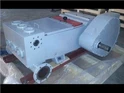
As a trusted reciprocating pump supplier, I've had the privilege of witnessing the diverse applications and benefits of these robust machines. Reciprocating pumps are known for their ability to deliver high-pressure fluid transfer and are used in a wide range of industries, from oil and gas to water treatment. One of the key factors that determine the performance and application of a reciprocating pump is the number of cylinders it has. In this blog post, I'll explore the different types of reciprocating pumps based on the number of cylinders, discuss their advantages, and provide insights into their applications.
Single - Cylinder Reciprocating Pumps
Single - cylinder reciprocating pumps are the simplest form of reciprocating pumps. They consist of a single cylinder, a piston or plunger, suction and discharge valves. When the piston or plunger moves backward (suction stroke), the pressure inside the cylinder decreases, allowing the fluid to enter through the suction valve. As the piston moves forward (discharge stroke), the suction valve closes, and the fluid is forced out through the discharge valve.
The advantage of single - cylinder reciprocating pumps is their simplicity and low cost. They are relatively easy to maintain and operate, making them suitable for small - scale applications. For example, they can be used in laboratories for transferring small volumes of chemicals or in small water supply systems. However, single - cylinder pumps tend to produce pulsating flow, which may require additional equipment such as dampeners to smooth out the flow.
Double - Cylinder Reciprocating Pumps
Double - cylinder reciprocating pumps have two cylinders working in tandem. The operation of each cylinder is similar to that of a single - cylinder pump, but the arrangement of the cylinders helps to reduce the pulsation in the flow. When one cylinder is in the suction stroke, the other is in the discharge stroke, which results in a more continuous flow compared to a single - cylinder pump.
The double - cylinder design offers improved efficiency and a more stable flow rate. These pumps are commonly used in applications where a more consistent flow is required, such as in some industrial processes for transferring fluids at a steady pace. They can also handle larger volumes of fluid compared to single - cylinder pumps, making them suitable for medium - scale operations.
Triple - Cylinder Reciprocating Pumps
Triple - cylinder reciprocating pumps, also known as triplex pumps, are a popular choice in many industries. The three - cylinder configuration further reduces the pulsation in the flow, providing a nearly constant discharge pressure. This makes them ideal for applications that require high - pressure and continuous flow, such as in oil and gas well stimulation, water jet cutting, and high - pressure cleaning.
Triplex pumps are known for their high efficiency, reliability, and durability. They can handle a wide range of fluids, including abrasive and viscous materials. Their compact design and relatively high power - to - weight ratio make them suitable for both stationary and mobile applications.
Quintuplex Pumps
Quintuplex Pumps are equipped with five cylinders. The five - cylinder design provides an even smoother flow compared to triplex pumps, with very low pulsation. This makes them well - suited for applications where extremely precise and stable flow is required, such as in chemical injection and water injection in oil fields.
Water Injection Pump is a common application of quintuplex pumps. In oil fields, water injection is used to maintain reservoir pressure and enhance oil recovery. The smooth flow of quintuplex pumps ensures accurate and consistent water injection rates, which is crucial for the efficiency of the oil recovery process.
Other Multi - Cylinder Configurations
In addition to the above - mentioned types, there can be reciprocating pumps with more than five cylinders. These multi - cylinder pumps are designed to meet specific requirements of high - volume and ultra - smooth flow. However, they are less common due to their complexity and higher cost.
Applications in Different Industries
Reciprocating pumps are widely used in various industries. In the oil and gas industry, they are used for well drilling, enhanced oil recovery (including water injection and chemical injection), and pipeline pumping. The high - pressure capabilities of reciprocating pumps make them essential for these operations.
In the chemical industry, Reciprocating lean amine Pump and other types of reciprocating pumps are used for transferring corrosive and high - value chemicals. Their ability to handle different viscosities and pressures makes them suitable for a variety of chemical processes.
In the water treatment industry, reciprocating pumps are used for dosing chemicals, boosting water pressure, and sludge transfer. The precise control of flow rate and pressure provided by these pumps is crucial for the effective treatment of water.
Choosing the Right Reciprocating Pump
When selecting a reciprocating pump, several factors need to be considered. The number of cylinders is an important factor that affects the flow rate, pulsation, and pressure capabilities of the pump. Other factors include the type of fluid to be pumped (viscosity, corrosiveness, etc.), the required flow rate, the discharge pressure, and the operating environment.
As a reciprocating pump supplier, we have the expertise and experience to help you choose the right pump for your specific application. We offer a wide range of reciprocating pumps, from single - cylinder to multi - cylinder configurations, to meet the diverse needs of our customers.


Contact for Procurement
If you are in the market for reciprocating pumps and need more information or want to discuss your specific requirements, we are here to assist you. Our team of experts can provide detailed product information, technical support, and help you find the most suitable pump for your application. Whether you need a small - scale single - cylinder pump or a large - scale quintuplex pump, we have the solutions to meet your needs. Reach out to us for a consultation and let's work together to find the perfect reciprocating pump for your project.
References
- Karassik, I. J., McNulty, J. P., Cooper, P., & Allinder, C. C. (2008). Pump Handbook. McGraw - Hill Professional.
- Miller, R. W. (1996). Flow Measurement Engineering Handbook. McGraw - Hill.
- Warring, R. O. (2009). Pumps: Basics, Maintenance, and Troubleshooting. Elsevier.