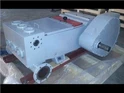

As a supplier of reciprocating pumps, I often encounter inquiries from customers regarding the suitability of our pumps for handling slurries. Slurries, which are mixtures of solids and liquids, present unique challenges in pumping applications due to their abrasive nature, high viscosity, and potential for settling. In this blog post, I will explore the feasibility of using reciprocating pumps for slurries, discuss the advantages and limitations, and provide some practical considerations for successful operation.


Understanding Reciprocating Pumps
Before delving into the use of reciprocating pumps for slurries, it is essential to understand how these pumps work. Reciprocating pumps are positive displacement pumps that use a piston or plunger to create a reciprocating motion within a cylinder. This motion causes the fluid to be drawn into the cylinder through an inlet valve and then forced out through an outlet valve. The pumping action is intermittent, with each stroke of the piston or plunger delivering a fixed volume of fluid.
Reciprocating pumps are known for their high efficiency, precise flow control, and ability to generate high pressures. They are commonly used in a wide range of industries, including oil and gas, chemical processing, mining, and water treatment. However, their suitability for handling slurries depends on several factors, including the pump design, the properties of the slurry, and the operating conditions.
Advantages of Using Reciprocating Pumps for Slurries
Despite the challenges posed by slurries, reciprocating pumps offer several advantages that make them a viable option for certain applications.
High Pressure Capability
Reciprocating pumps are capable of generating high pressures, which is often required for pumping slurries over long distances or through pipelines with high resistance. The ability to achieve high pressures allows for efficient transportation of the slurry, reducing the need for additional pumping stations or booster pumps.
Precise Flow Control
Reciprocating pumps provide precise flow control, which is essential for maintaining consistent slurry concentration and preventing settling or blockages in the pipeline. The fixed displacement nature of these pumps ensures that a specific volume of slurry is delivered with each stroke, allowing for accurate dosing and metering.
Abrasion Resistance
Many reciprocating pumps are designed with materials and components that are resistant to abrasion, such as hardened steel, ceramic, or rubber. These materials can withstand the wear and tear caused by the solid particles in the slurry, extending the pump's lifespan and reducing maintenance requirements.
Self-Priming
Reciprocating pumps are self-priming, which means they can draw fluid into the pump without the need for external priming devices. This feature is particularly useful for slurries that may contain air or gas, as it allows the pump to start up quickly and efficiently.
Limitations of Using Reciprocating Pumps for Slurries
While reciprocating pumps offer several advantages for handling slurries, they also have some limitations that need to be considered.
High Maintenance Requirements
The abrasive nature of slurries can cause significant wear and tear on the pump components, such as the pistons, valves, and seals. This requires regular maintenance and replacement of these parts, which can be costly and time-consuming. Additionally, the presence of solid particles in the slurry can cause blockages in the pump valves or passages, leading to reduced performance or pump failure.
Limited Flow Rate
Reciprocating pumps typically have a lower flow rate compared to other types of pumps, such as centrifugal pumps. This can be a limitation for applications that require high-volume slurry transfer. However, multiple reciprocating pumps can be used in parallel to increase the overall flow rate.
Noise and Vibration
Reciprocating pumps can generate significant noise and vibration during operation, which can be a concern in some environments. The pulsating nature of the pumping action can also cause additional stress on the pipeline and other equipment, leading to potential damage or failure.
Slurry Settling
Slurries have a tendency to settle over time, especially if they contain large or heavy solid particles. This can cause blockages in the pump or pipeline, reducing the efficiency of the pumping system. To prevent settling, the slurry may need to be continuously agitated or recirculated, which can add complexity and cost to the system.
Practical Considerations for Using Reciprocating Pumps for Slurries
To ensure the successful operation of reciprocating pumps for slurries, several practical considerations need to be taken into account.
Pump Selection
The selection of the appropriate reciprocating pump for a slurry application is crucial. Factors such as the slurry properties (e.g., particle size, concentration, viscosity), the required flow rate and pressure, and the operating conditions (e.g., temperature, pH) should be carefully considered. It is recommended to consult with a pump manufacturer or a qualified engineer to determine the most suitable pump for the specific application.
Material Selection
The materials used in the construction of the pump components should be carefully selected to withstand the abrasive and corrosive nature of the slurry. Hardened steel, ceramic, and rubber are commonly used materials for slurry pumps. The choice of material depends on the specific properties of the slurry and the operating conditions.
Pump Design
The design of the reciprocating pump should be optimized for handling slurries. This may include features such as large valve openings to prevent blockages, robust seals to prevent leakage, and easy access for maintenance and cleaning. Some pumps are also designed with special features, such as a slurry bypass system or a flush system, to improve performance and reduce wear.
System Design
The overall system design, including the pipeline layout, the presence of valves and fittings, and the agitation or recirculation system, should be carefully considered to minimize the risk of settling and blockages. The pipeline should be sized appropriately to ensure a sufficient flow velocity to keep the solid particles in suspension. Additionally, the use of smooth-bore pipes and elbow fittings with large radii can help reduce friction and prevent particle accumulation.
Maintenance and Monitoring
Regular maintenance and monitoring are essential for the reliable operation of reciprocating pumps for slurries. This includes inspecting and replacing worn or damaged components, cleaning the pump and pipeline, and monitoring the slurry properties and pump performance. It is also recommended to establish a preventive maintenance schedule to ensure timely servicing and minimize downtime.
Conclusion
In conclusion, reciprocating pumps can be used for slurries, but their suitability depends on several factors, including the pump design, the properties of the slurry, and the operating conditions. While these pumps offer several advantages, such as high pressure capability, precise flow control, and abrasion resistance, they also have some limitations, such as high maintenance requirements, limited flow rate, and noise and vibration. By carefully considering these factors and implementing appropriate design and maintenance practices, reciprocating pumps can provide reliable and efficient slurry pumping solutions.
If you are considering using a reciprocating pump for your slurry application, I encourage you to explore our range of Reciprocating lean amine Pump, Triplex Pump, and API674 Pumps. Our pumps are designed and manufactured to meet the highest standards of quality and performance, and our team of experts is available to provide you with technical support and guidance. Contact us today to discuss your specific requirements and find the best pump solution for your application.
References
- Karassik, I. J., Messina, J. P., Cooper, P. T., & Heald, C. C. (2008). Pump Handbook. McGraw-Hill Professional.
- Stepanoff, A. J. (1957). Centrifugal and Axial Flow Pumps: Theory, Design, and Application. John Wiley & Sons.
- Walas, S. M. (1990). Chemical Process Equipment: Selection and Design. Butterworth-Heinemann.