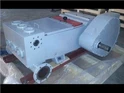

The reciprocating pump is a critical piece of equipment in various industries, known for its ability to handle diverse fluids and provide high pressures. One of the key factors that can significantly influence its performance is the compressibility of the fluid being pumped. In this blog, we'll explore the impact of fluid compressibility on a reciprocating pump in depth, as a leading reciprocating pump supplier, and help you understand how to better manage and optimise pump operations.
Understanding Fluid Compressibility
Before delving into its impact on reciprocating pumps, it's essential to understand what fluid compressibility is. In simple terms, compressibility is a measure of the relative volume change of a fluid in response to a pressure change. Gases are highly compressible, which means their volume can change significantly under pressure changes. Liquids, on the other hand, are considered incompressible for most practical purposes, but they do exhibit a small degree of compressibility. The compressibility of a fluid is typically defined by the coefficient of compressibility, which is the reciprocal of the bulk modulus (K) of the fluid.
Impact on Pumping Efficiency
Fluid compressibility can have a substantial impact on the efficiency of a reciprocating pump. In an ideal situation, where the fluid is completely incompressible, the pump would transfer a fixed volume of fluid with each stroke. However, when dealing with compressible fluids, a portion of the energy input is used to compress the fluid rather than to transfer it.
During the suction stroke, the pressure in the pump chamber decreases. If the fluid is compressible, it expands to fill the increased volume in the chamber. As a result, the actual volume of fluid drawn into the chamber is less than the theoretical volume displacement. On the discharge stroke, the pressure increases, and the fluid is compressed again. This compression and expansion cycle leads to energy losses, reducing the overall volumetric efficiency of the pump.
For example, in applications where gases are present in the liquid being pumped, such as in oil and gas production where there might be dissolved gases, the compressibility effect can be significant. The pump has to work harder to achieve the same level of fluid delivery, leading to increased energy consumption and higher operating costs.
Effects on Pumping Capacity
The compressibility of the fluid also affects the pumping capacity of a reciprocating pump. The theoretical pumping capacity is based on the volume displacement per stroke and the number of strokes per unit time. However, the presence of compressible fluid can reduce the effective pumping capacity.
As the fluid is compressed during the discharge stroke, some of the fluid that is supposed to be discharged remains in the chamber due to the compression. Additionally, during the suction stroke, the expansion of the fluid means that less fresh fluid is drawn into the chamber. These factors combine to reduce the actual amount of fluid pumped per unit time.
In extreme cases, if the compressibility is very high, the pump might not be able to pump the required volume of fluid at all. This is a critical consideration in applications such as chemical processing, where precise flow rates are essential for maintaining the quality of the end product.
Impact on Pressure Pulsations
Pressure pulsations are a common phenomenon in reciprocating pumps, and fluid compressibility can exacerbate this issue. The compression and expansion of the fluid during the pumping cycle create pressure fluctuations in the pump system. These pulsations can cause a range of problems, including mechanical vibrations, noise, and damage to the pump and other components in the system.
Higher fluid compressibility leads to more significant pressure variations because the fluid can change its volume more easily under pressure changes. This can result in increased stress on the pump valves, seals, and piping, reducing their lifespan and increasing the risk of leaks and failures. In some cases, the pressure pulsations can also cause flow instabilities, which can affect the performance of downstream processes.
Coping Strategies
As a reciprocating pump supplier, we understand the challenges posed by fluid compressibility and offer several strategies to mitigate its impact.
Gas Separation
One of the most effective ways to reduce the effects of compressibility is to separate any gases present in the fluid before it enters the pump. This can be achieved using gas separators, which are designed to remove gas bubbles from the liquid stream. By reducing the gas content, the overall compressibility of the fluid is decreased, improving the pump's efficiency and capacity.
Dampening Devices
Another approach is to use dampening devices such as pulsation dampeners. These devices help to smooth out the pressure pulsations caused by the compression and expansion of the fluid. Pulsation dampeners typically consist of a chamber filled with a compressible gas, which acts as a buffer to absorb the pressure fluctuations. This reduces the stress on the pump and other components in the system, improving their reliability and lifespan.
Pump Design Optimization
We also offer pumps that are specifically designed to handle compressible fluids more effectively. For example, Quintuplex Pumps are known for their ability to provide a more consistent flow and reduce pressure pulsations compared to other types of reciprocating pumps. These pumps have multiple cylinders that work in a coordinated manner, which helps to balance the pressure and flow characteristics.


Applications and Considerations
The impact of fluid compressibility varies depending on the specific application. In industries such as oil and gas, chemical processing, and power generation, reciprocating pumps are often used to handle fluids with different levels of compressibility.
In the oil and gas industry, for instance, reciprocating pumps are used to transfer crude oil, which may contain dissolved gases. The compressibility of the oil-gas mixture can affect the efficiency and performance of the pumps, as well as the safety of the operation. In chemical processing, pumps are used to handle a wide range of fluids, including solvents and reactants, some of which may be compressible. Precise control of flow and pressure is crucial in these applications to ensure the quality of the final product.
When selecting a reciprocating pump for a particular application, it's important to consider the compressibility of the fluid. Positive Displacement Pumps, such as reciprocating pumps, are generally suitable for handling fluids with low to moderate compressibility. However, for applications where the fluid is highly compressible, additional measures may be required to ensure optimal performance.
Our Expertise as a Reciprocating Pump Supplier
As a leading reciprocating pump supplier, we have extensive experience in dealing with the challenges posed by fluid compressibility. We offer a wide range of Reciprocating lean amine Pump and related products that are designed to meet the specific needs of different industries. Our team of experts can provide you with detailed advice on pump selection, installation, and maintenance to ensure that your pumping system operates efficiently and reliably.
If you're looking for a reliable reciprocating pump solution or need to address the issues related to fluid compressibility, we're here to help. Contact us today to discuss your requirements and explore how our products and services can benefit your operation. We look forward to the opportunity to work with you and provide you with the best reciprocating pump solutions.
References
- Smith, J. (2020). Fluid Mechanics for Pumping Systems. McGraw - Hill.
- Jones, A. (2019). Reciprocating Pump Design and Operation. Wiley.
- Brown, C. (2018). Handbook of Industrial Pumps. Elsevier.