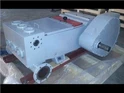

Testing the performance of a triplex pump is crucial, whether you're a long - time industry pro or just starting to learn about these machines. As a triplex pump supplier, I've seen firsthand how important it is to ensure your pump is working at its best. Let's break down the process of testing a triplex pump's performance.
Understanding the Basics of a Triplex Pump
A triplex pump is a type of Positive Displacement Pumps that consists of three plungers or pistons. These pumps are widely used in various industries due to their high efficiency and reliability. They can handle different types of fluids, from water to heavy oils and chemicals.


Before we dive into the testing process, it's essential to know why performance testing matters. A well - performing triplex pump can save you time and money in the long run. It reduces the risk of breakdowns, minimizes maintenance costs, and ensures that your operations run smoothly.
Pre - Test Preparations
First things first, we need to do some pre - test preparations. Safety is always the top priority. Make sure the pump is shut down and disconnected from any power sources before you start. Wear appropriate safety gear such as gloves, safety glasses, and ear protection.
Next, we need to inspect the pump for any visible damage. Check the hoses, connections, and the pump body itself. Look for signs of leaks, cracks, or loose parts. If you find any issues, it's best to fix them before proceeding with the performance test.
Another important step is to check the fluid levels. The pump should be filled with the appropriate fluid according to the manufacturer's recommendations. This could be water, oil, or a specific type of chemical, depending on the pump's intended use.
Flow Rate Testing
One of the key performance indicators of a triplex pump is its flow rate. To test the flow rate, you'll need a flow meter. There are different types of flow meters available, such as positive displacement flow meters, turbine flow meters, and electromagnetic flow meters. Choose the one that is most suitable for your pump and the fluid you're using.
Here's how you can test the flow rate. First, start the pump and let it run for a few minutes to reach a stable operating condition. Then, measure the amount of fluid that passes through the pump within a specific time period. You can use the flow meter to directly read the flow rate in units such as gallons per minute (GPM) or liters per minute (LPM).
Compare the measured flow rate with the pump's rated flow rate. If the measured flow rate is significantly lower than the rated flow rate, there could be an issue with the pump, such as a clogged filter, a worn - out plunger, or a problem with the pump's valves.
Pressure Testing
Pressure testing is another critical aspect of evaluating a triplex pump's performance. You'll need a pressure gauge to measure the pressure in the pump system. Install the pressure gauge at a suitable location in the discharge line of the pump.
Start the pump and gradually increase the load until the pump reaches its normal operating pressure. Observe the pressure gauge reading. Compare the measured pressure with the pump's rated pressure. If the pressure is too high or too low, it could indicate a problem with the pump or the system.
High pressure could be caused by a blocked pipe, a faulty pressure relief valve, or an incorrect adjustment of the pump's settings. Low pressure, on the other hand, could be due to a leak in the system, a worn - out seal, or a problem with the pump's suction.
Efficiency Testing
Efficiency is a measure of how well the pump converts input power into useful work. To test the efficiency of a triplex pump, you'll need to measure the input power and the output power.
The input power can be measured using a power meter. This will give you the amount of electrical or mechanical power that is being supplied to the pump. The output power can be calculated based on the flow rate and the pressure. The formula for calculating the hydraulic power (output power) is:
[P_{hydraulic}=\frac{Q\times \Delta P}{1714}]
where (Q) is the flow rate in GPM and (\Delta P) is the pressure difference in psi.
The efficiency of the pump ((\eta)) is then calculated as the ratio of the output power to the input power:
[\eta=\frac{P_{hydraulic}}{P_{input}}\times100%]
A highly efficient pump will have an efficiency close to the manufacturer's specified value. If the measured efficiency is lower, it could mean that the pump is not operating optimally, and there may be a need for maintenance or adjustment.
Noise and Vibration Testing
Excessive noise and vibration can be signs of a problem in a triplex pump. During the performance test, pay attention to the noise level and the amount of vibration the pump generates.
There are several reasons why a pump may produce excessive noise and vibration. It could be due to an unbalanced load, a misaligned coupling, or a worn - out bearing. If you notice any abnormal noise or vibration, stop the pump immediately and investigate the cause.
You can use a vibration analyzer to measure the level of vibration in the pump. This device can detect the frequency and amplitude of the vibrations, which can help you identify the source of the problem.
Testing Specific Applications
If your triplex pump is used for a specific application, such as TRENCHLESS TECHNOLOGY (HDD) Pump or Reciprocating lean amine Pump, you may need to perform additional tests.
For example, if it's a pump used in trenchless technology, you'll need to test its ability to handle the specific soil conditions and the high - pressure requirements of the drilling process. You may need to simulate the actual working conditions in a test environment to ensure the pump can perform as expected.
Post - Test Analysis
After completing all the tests, it's time to analyze the results. Compare the measured values with the pump's specifications and the industry standards. If there are any deviations, make a note of them and determine the root cause of the problem.
If the pump is not performing up to the mark, you may need to perform maintenance or make adjustments. This could involve replacing worn - out parts, cleaning the pump, or adjusting the settings.
Conclusion and Call to Action
Testing the performance of a triplex pump is a comprehensive process that involves multiple steps. By following the procedures outlined in this blog, you can ensure that your pump is operating at its best.
As a triplex pump supplier, we're here to support you every step of the way. Whether you need help with testing your pump, finding replacement parts, or choosing the right pump for your application, we've got you covered. If you're interested in purchasing a triplex pump or have any questions about our products, don't hesitate to reach out. We're eager to start a conversation and help you find the best pumping solution for your needs.
References
- Pump Handbook, 4th Edition by Igor J. Karassik et al.
- Technical manuals of various triplex pump manufacturers.