

The rapid development of supercritical carbon dioxide (sCO₂) power cycles, CCUS carbon storage, and supercritical extraction technologies is driving growing demand for high-performance CO₂ booster pumps.
As one of the core pieces of equipment in an sCO₂ system, the booster pump operates under demanding conditions where fluid properties can change significantly near the critical point. Stable pressure delivery, reliable sealing, and resistance to flow instability are therefore key technical challenges.
Globally, leading manufacturers have accumulated considerable experience in high-power, long-life pump systems, while Chinese research institutes and equipment manufacturers are accelerating domestic development for megawatt-scale sCO₂ power generation, CCUS projects, and high-pressure industrial applications.
Why Supercritical CO₂ Booster Pumps Are Technically Challenging
Supercritical CO₂ has very different physical properties from conventional liquids.
Near the critical point, small changes in pressure and temperature can cause large changes in density and compressibility. This places higher requirements on pump design, sealing systems, flow stability, and system control.
Major technical challenges include:
- High-pressure sealing under supercritical conditions
- Stable fluid delivery near the critical point
- Prevention of gas lock and cavitation-like instability
- Long-term reliability under continuous operation
- Flow pulsation control
- Material compatibility
- Pump and system coordination
- Real-time condition monitoring
These factors have made sCO₂ booster pumps a critical technology in power generation, carbon capture, chemical processing, and extraction systems.
Major International Manufacturers
Several international pump manufacturers have developed products and technologies for supercritical or dense-phase CO₂ applications.
Barber-Nichols in the United States has participated in sCO₂ power-cycle research programs and focuses on compact, high-speed centrifugal booster pumps for experimental and demonstration platforms.
LEWA in Germany is known for high-pressure reciprocating plunger pumps, with strengths in precision metering, flow control, and sealing technology. Its products are used in supercritical extraction, chemical processing, and high-pressure research systems.
Sulzer and Flowserve focus more on large-flow centrifugal pumping solutions for dense-phase CO₂ transportation and CCUS pipeline applications, where long-term continuous operation and high efficiency are important.
URACA specializes in high-pressure reciprocating pump technology and provides plunger pump solutions for high-pressure process applications, including supercritical extraction and test-loop systems.
HERMETIC is known for sealless canned-motor pump technology, offering advantages in applications where leakage prevention is a major concern.
Development of Supercritical CO₂ Pumps in China
China has made rapid progress in the development of supercritical and dense-phase CO₂ pumping equipment.
At present, small- and medium-flow pumps for laboratory and pilot-scale applications have achieved a relatively high level of localization. At the same time, domestic manufacturers are working to improve large-flow, high-pressure pump systems for CCUS, enhanced oil recovery, and megawatt-scale sCO₂ power-generation projects.
Representative Chinese manufacturers are focusing on several technical routes, including:
- High-pressure reciprocating plunger pumps
- Large-flow dense-phase CO₂ pumps
- Gas-driven booster systems
- Skid-mounted integrated pump packages
- Multi-stage centrifugal pumps
- Intelligent pressure and flow control systems
Nanjing Yalong: High-Pressure Plunger Pumps for Supercritical CO₂ Applications
Nanjing Yalong Petrochemical Equipment Technology Co., Ltd. focuses on the development and manufacturing of high-pressure reciprocating and plunger pumps for demanding petroleum, petrochemical, energy, and research applications.
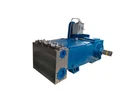
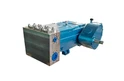
For supercritical CO₂ applications, Nanjing Yalong has developed 3CQ and 5CQ series high-pressure plunger pumps, covering a wide pressure range for different experimental and industrial requirements.
The company's technical approach focuses on:
- High-pressure reciprocating pump structure
- Stable fluid delivery
- Reduced flow pulsation
- Reliable sealing performance
- Wear-resistant plunger design
- Adaptation to supercritical and high-pressure CO₂ conditions
Ceramic plungers are used in selected configurations to improve wear resistance and support longer service life under demanding operating conditions.
Nanjing Yalong's supercritical CO₂ pump solutions can be applied in:
- sCO₂ power-cycle test platforms
- University and research institute laboratories
- Supercritical extraction systems
- Chemical and new-material processing
- High-pressure CO₂ circulation systems
- Pilot-scale energy research projects
The company has also supplied pump equipment for domestic universities and research institutions, supporting the development of supercritical CO₂ power-cycle and high-pressure fluid test platforms.
Key Trends in the Global sCO₂ Pump Market
The overall development direction of supercritical CO₂ pumping equipment is becoming increasingly clear.
Higher Flow and Power
As sCO₂ technology moves from laboratory research to demonstration and commercial-scale projects, demand is shifting toward larger flow rates, higher power, and longer continuous operating periods.
Improved Sealing Reliability
High-pressure sealing remains one of the most important technical challenges. Future pump development will continue to focus on advanced sealing materials, lower leakage rates, and longer maintenance intervals.
Better Stability Near the Critical Point
Fluid-property changes near the critical point can create operating instability. Pump manufacturers are therefore improving hydraulic design, fluid-end configuration, and control strategies to maintain stable pressure and flow.
Skid-Mounted Integration
Skid-mounted systems are becoming increasingly popular because they simplify installation, commissioning, transportation, and on-site maintenance.
Intelligent Monitoring and Control
More projects are incorporating real-time monitoring of pressure, temperature, vibration, and flow to improve operating safety and predictive maintenance capability.
From Research Equipment to Industrial Applications
International manufacturers still have advantages in large-scale, high-power, long-life pump systems, especially in large CCUS pipeline and power-generation projects.
However, Chinese manufacturers are rapidly closing the gap through research programs, demonstration projects, and localized equipment development.
For small- and medium-flow research applications, domestic pump solutions are already widely available. The next stage of development will focus on:
- Large-flow high-pressure pump systems
- Long-term reliability
- Supercritical sealing technology
- Variable-condition operation
- Pump-system integrated control
- Industrial-scale project verification
Outlook
As more sCO₂ power-generation demonstration platforms and CCUS projects move forward, demand for reliable supercritical CO₂ booster pumps is expected to continue growing.
The industry is moving from laboratory-scale equipment toward larger, more integrated and more intelligent pump systems.
For Chinese manufacturers such as Nanjing Yalong Petrochemical Equipment Technology Co., Ltd., the current market represents an important opportunity to accelerate the industrialization of high-pressure supercritical CO₂ pump technology and provide more localized equipment solutions for energy, carbon capture, chemical processing, and research applications.